




If you are on this page, it means you already know what cerebral palsy (CP) is. You also understand that cerebral palsy affects each individual differently. Here, you will learn about our approach to CP and why it is successful for every patient.
Briefly, we will clarify some basic concepts and characteristics of this condition, which affects about 17 million people worldwide.
Cerebral palsy (CP) represents a group of non-progressive motor disorders resulting from brain abnormalities or injuries occurring during the prenatal, perinatal, or postnatal period. Paresis, spasticity, involuntary movements, changes in muscle tone, coordination disorders, motor and sensory impairments are just part of the clinical picture of CP.
In many cases, the exact cause of the condition remains unclear. Research indicates that the greatest risk for developing CP is having a viral infection during pregnancy, the use of strong medications, and other psychoactive substances during the same period. Other risk factors include multiple pregnancies, premature babies, children with brain hemorrhage, as well as prolonged labor.
In some patients with this diagnosis, intellectual abilities are fully preserved, while in others this is not the case. However, in both cases, rehabilitation procedures can be applied to alleviate the condition and improve the patient’s overall health.
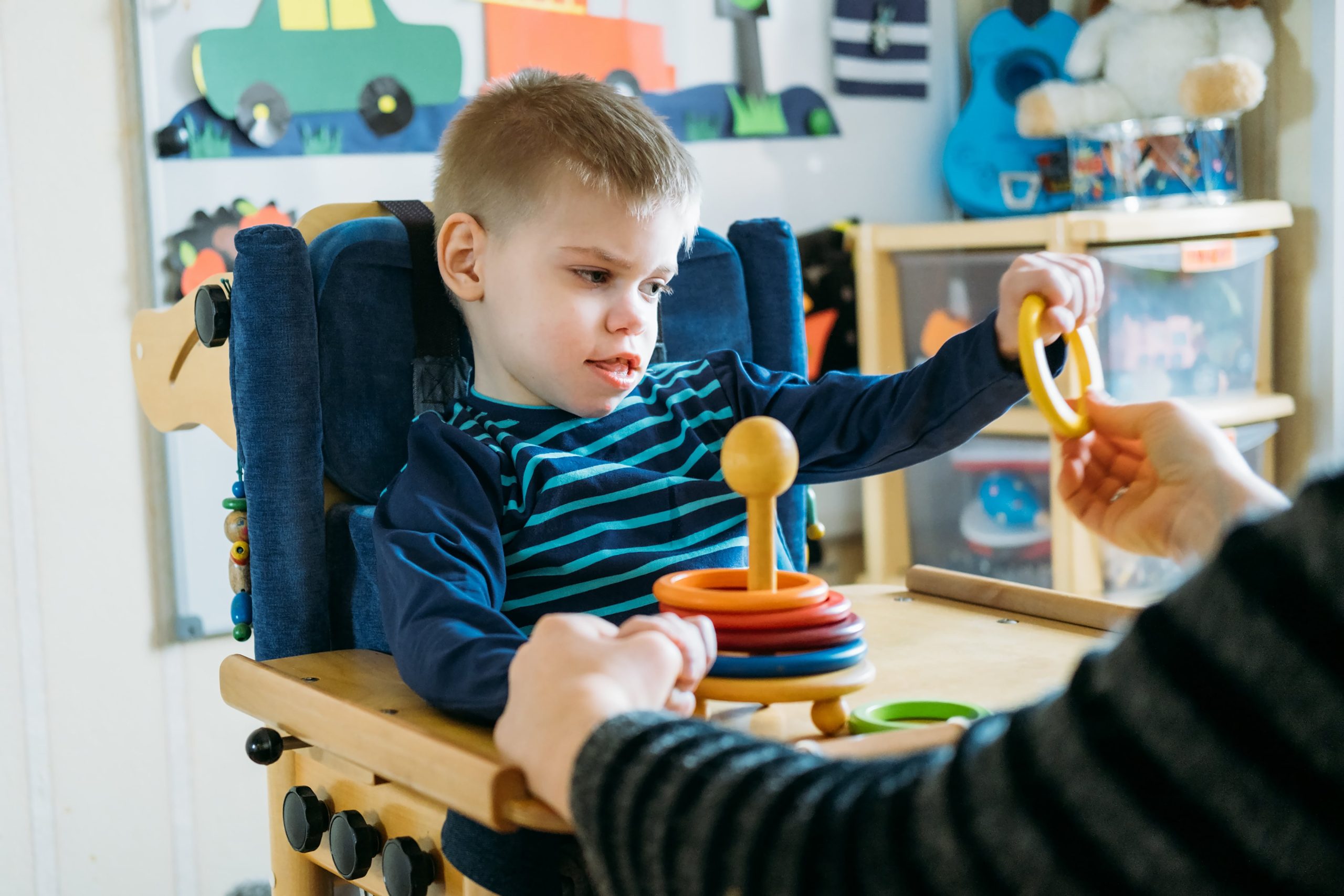
The condition can be influenced and improved through prolonged and comprehensive rehabilitation procedures, medication programs (for some patients), and/or surgical interventions (for some patients).
Movement control is severely impaired, and the muscles are either tense or flaccid, which significantly restricts active movements.
Purposeful limb movements are significantly affected due to weak motor control, which impacts different muscle groups depending on the form of cerebral palsy. Tremors may also appear in some patients.
Bone and joint deformities are observed, which, together with muscle tone disturbances, contribute to delayed or often even impossible walking in children.
There is an inability to hold the head upright or maintain it in a certain position for a long time, excessive drooling, and difficulties with sucking and swallowing.
Walking in cerebral palsy is often dependent on another person and/or assistive devices, but in mild cases it can be independent. Our primary responsibility is to train our patients in a correct physiological gait where possible, or to develop a strategy tailored to their individual needs and requirements.
Intensive rehabilitation combined with Tyromotion devices helps patients adapt more easily to their environment, enhances cognitive potential, and improves psycho-emotional well-being.
Physiotherapy plays a key role in rehabilitation. A complex of physiotherapeutic procedures is individually prescribed by a physiotherapist doctor to improve the body’s motor functions.
Due to changes in muscle tone, purposeful limb movements are difficult or even impossible. Our therapists are trained to unlock as much potential as possible in their patients!
One of the key physical qualities we focus on in our center is reaction speed. This helps patients become more confident in both usual and unusual situations in their daily lives.
Cognitive skills are related to how a person understands and functions in the world. They represent mental abilities and/or processes involved in nearly every human action. Through therapy using conventional and robotic methods, we influence cognitive abilities.